Before Winning the Ball: Eight Essential Defensive Skills
Patience, anticipation and collective timing: read defensive quality beyond the final tackle.
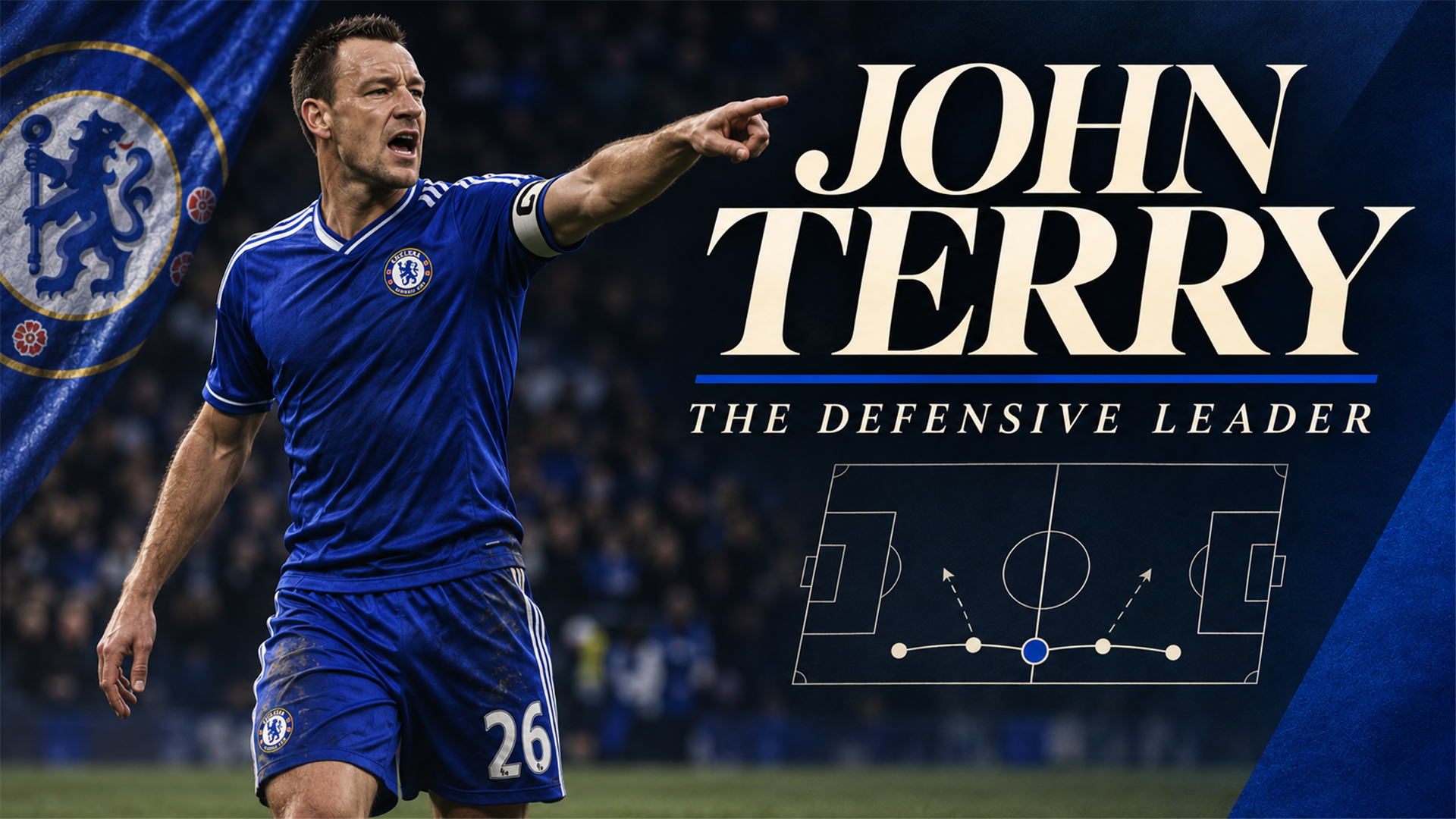
A tackle is visible; the decisions that make it possible often are not. Defensive work combines individual technique with positioning and collective behaviour. These eight topics are a scouting framework, not an exhaustive coaching manual or a ranking of players.
Standing tackle: patience before contact
The defender manages distance, stays balanced and looks for a moment when the ball becomes exposed. Jockeying guides the attacker while delaying a committed challenge. Kanté offers examples of timing and repeated adjustments. Staying on your feet is not about standing rigidly upright: a responsive body shape keeps several options available.
Player examplesN’Golo Kanté
Sliding tackle: commitment and recovery
A sliding tackle can reach a ball that a standing challenge cannot. It also reduces the defender’s ability to react immediately if the ball remains in play. Nesta provides a reference for precise intervention. Touching the ball first does not by itself settle whether a challenge is fair; timing, control and the nature of contact matter.
Player examplesAlessandro Nesta
Blocking: closing the shooting lane
A useful block starts with reading the shooter and closing the route to goal. Timing and body control matter as much as commitment. Godín illustrates defending within a compact unit. A block can prevent a shot reaching the goalkeeper, but the next action matters too: where does the rebound fall?
Player examplesDiego Godín
Interception: arriving before the receiver
Rather than waiting for a duel, the defender reads the passing route and steps into it. The passer’s body shape, a receiver’s movement and ball speed provide clues. Cannavaro and Nesta offer references for anticipation. Stepping out still carries risk: a disguised pass can exploit the space left behind.
Player examplesFabio Cannavaro · Alessandro Nesta

Defensive heading: the destination matters
Winning the aerial contact is only one part of the action. The defender judges the flight, competes for position and directs the ball towards safety or a teammate when possible. Terry provides a reference for aerial defending. There is no single correct destination in every situation: pressure and second-ball positioning determine the useful clearance.
Player examplesJohn Terry
Stepping up together: managing the line
The defensive line adjusts to the ball, pressure on the passer and runs in behind. Coordinated stepping can restrict depth, but a poorly timed or uneven movement may expose the goal. Saliba and Gabriel provide examples of a partnership within a collective line. Read the entire unit, including the goalkeeper, rather than crediting a single player.
Player examplesWilliam Saliba · Gabriel Magalhães
Pressing triggers: recognising the moment
A poor touch, a backward pass or an isolated receiver can signal that pressure is worthwhile. The first runner needs teammates to close exits and maintain cover. Klopp’s Liverpool provides a reference for coordinated pressing. A trigger is a shared cue, not an instruction for everyone to chase the ball indiscriminately.
Player examplesJürgen Klopp / Liverpool
Recovery runs: restoring the balance
When the first line is bypassed, recovery is about choosing a useful destination at speed. A defender may protect the centre, track a runner or close a crossing route. Starting position and support affect what is possible, so sprint speed alone is not a fair assessment. Follow where the danger is heading, not only where the ball is now.
Player examples-
Read the decision behind the intervention
Ask what happened before the duel and what happened after it. Good defending can delay, guide or prevent danger without producing a highlight. If the line is broken, the goalkeeper becomes the next decision-maker - explored in the goalkeeping article.
Continue reading: modern goalkeeping ↗